
 Image 1 of 4
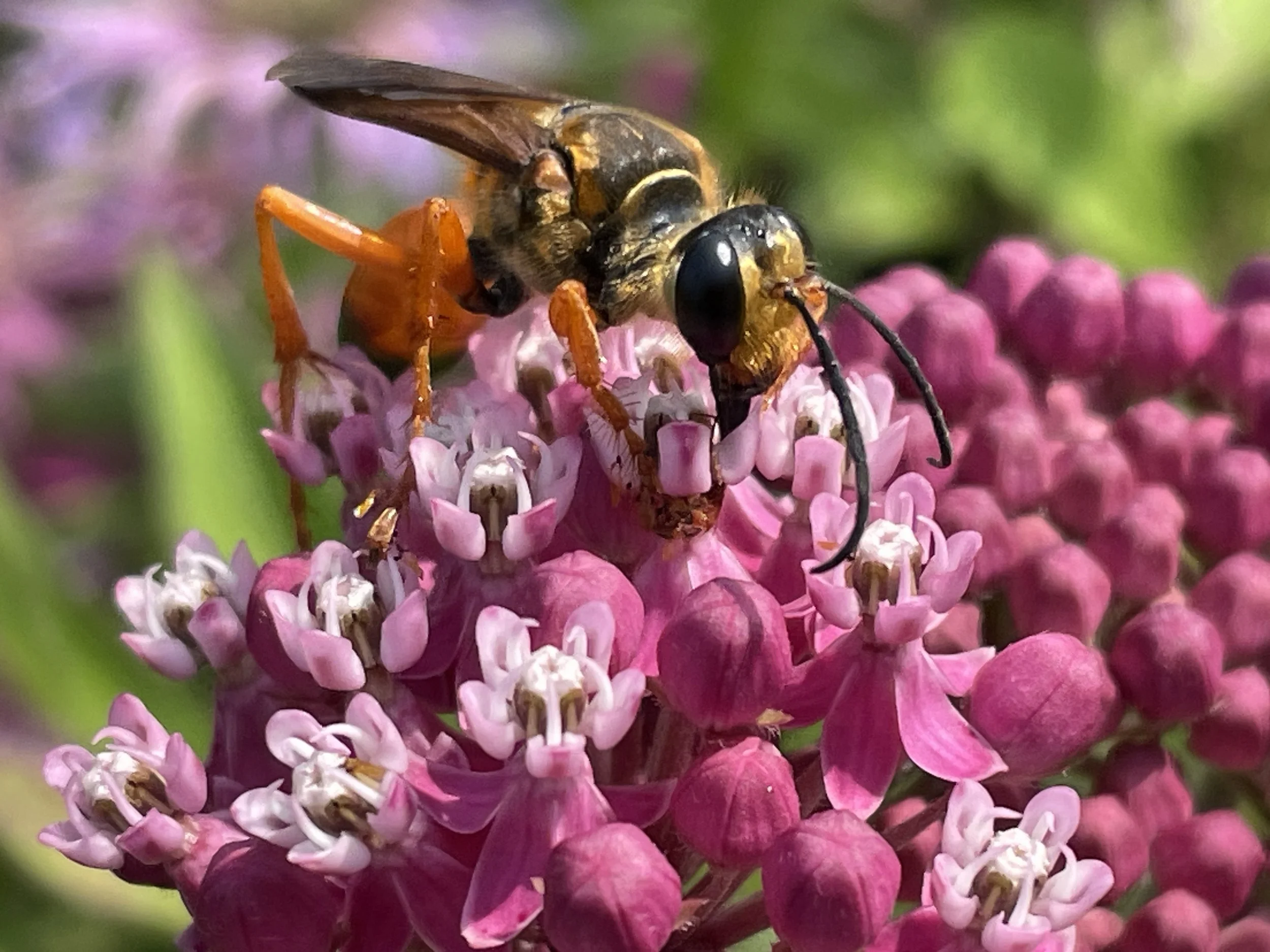 Image 2 of 4
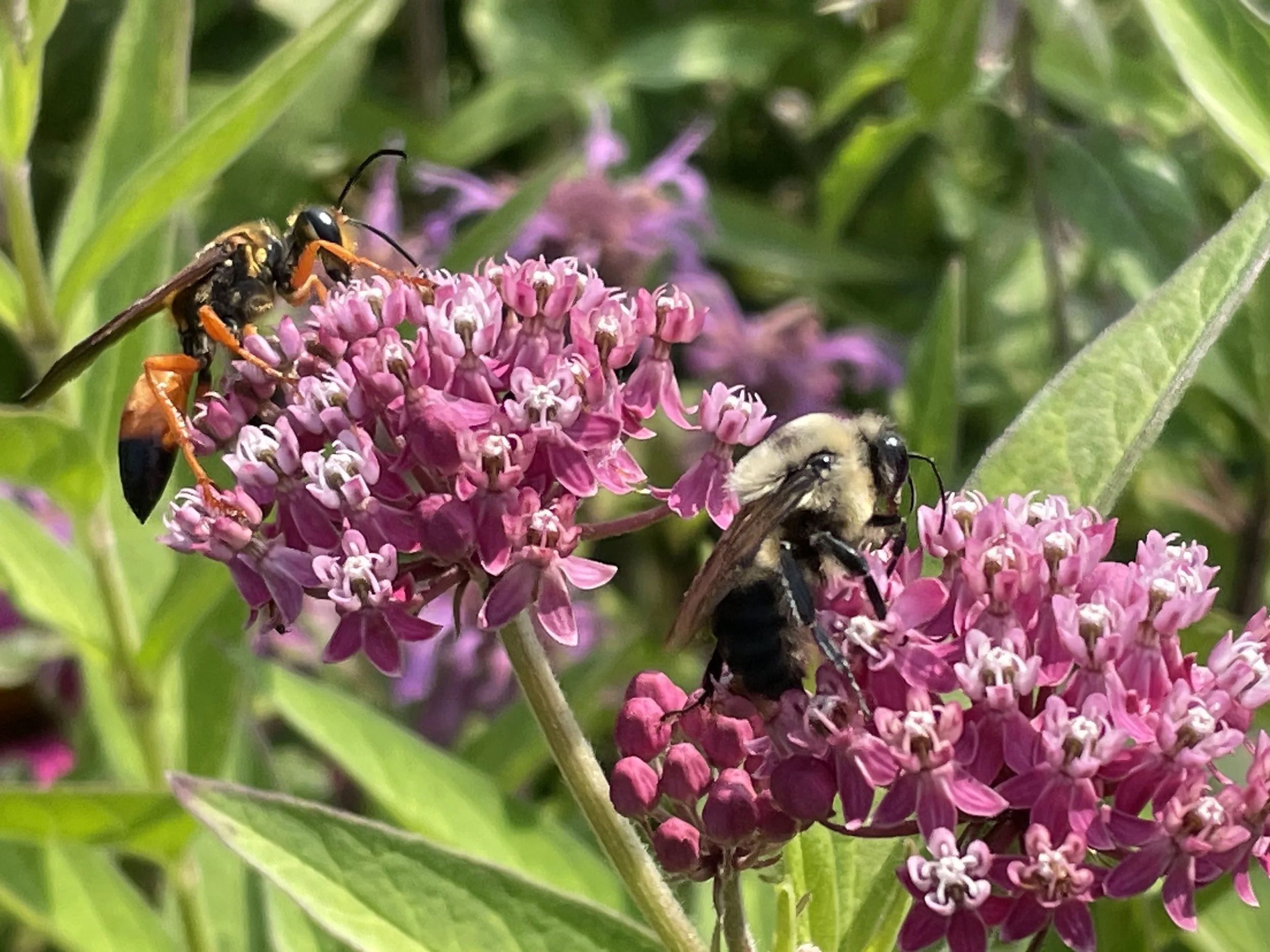 Image 3 of 4
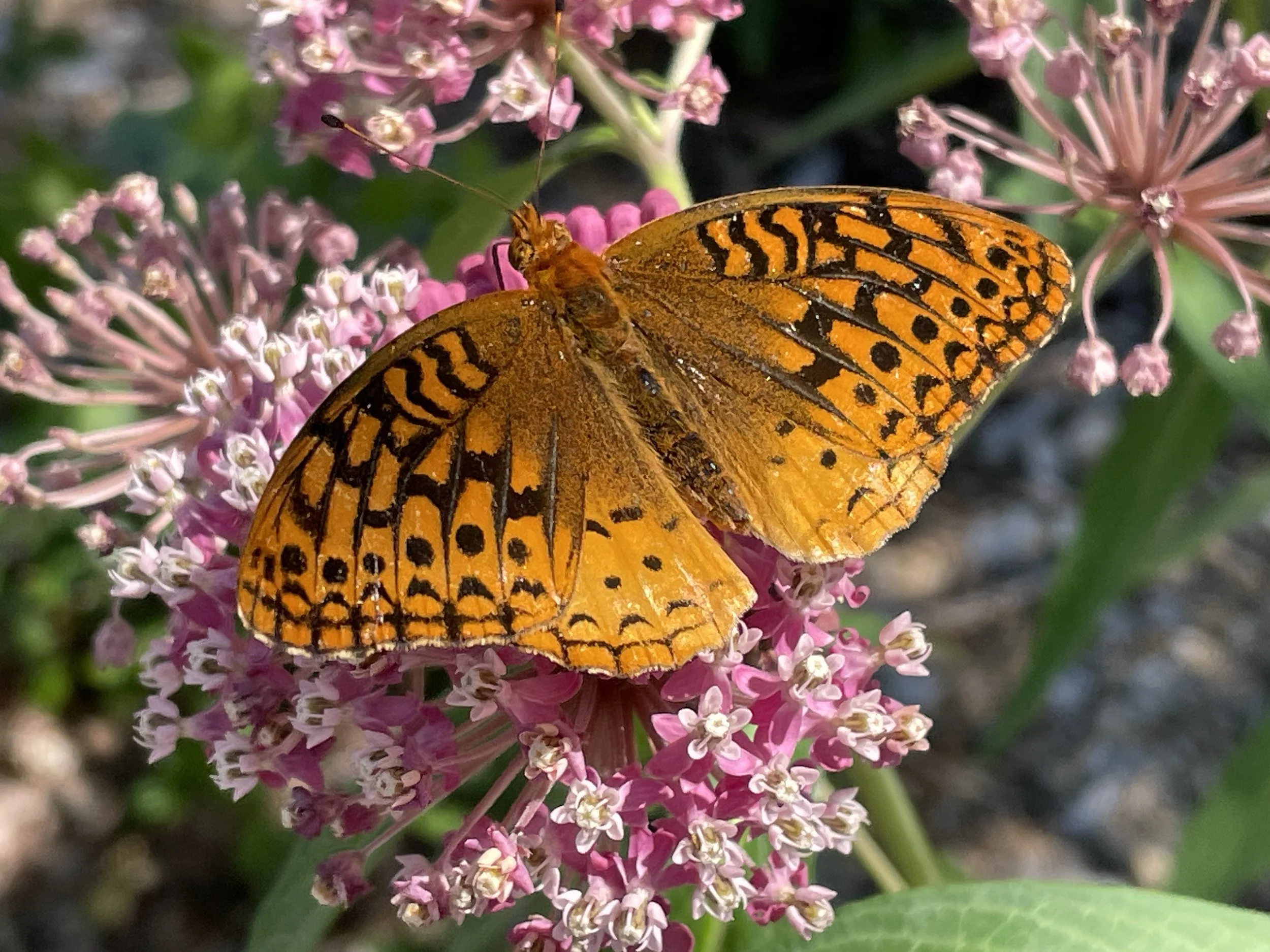 Image 4 of 4
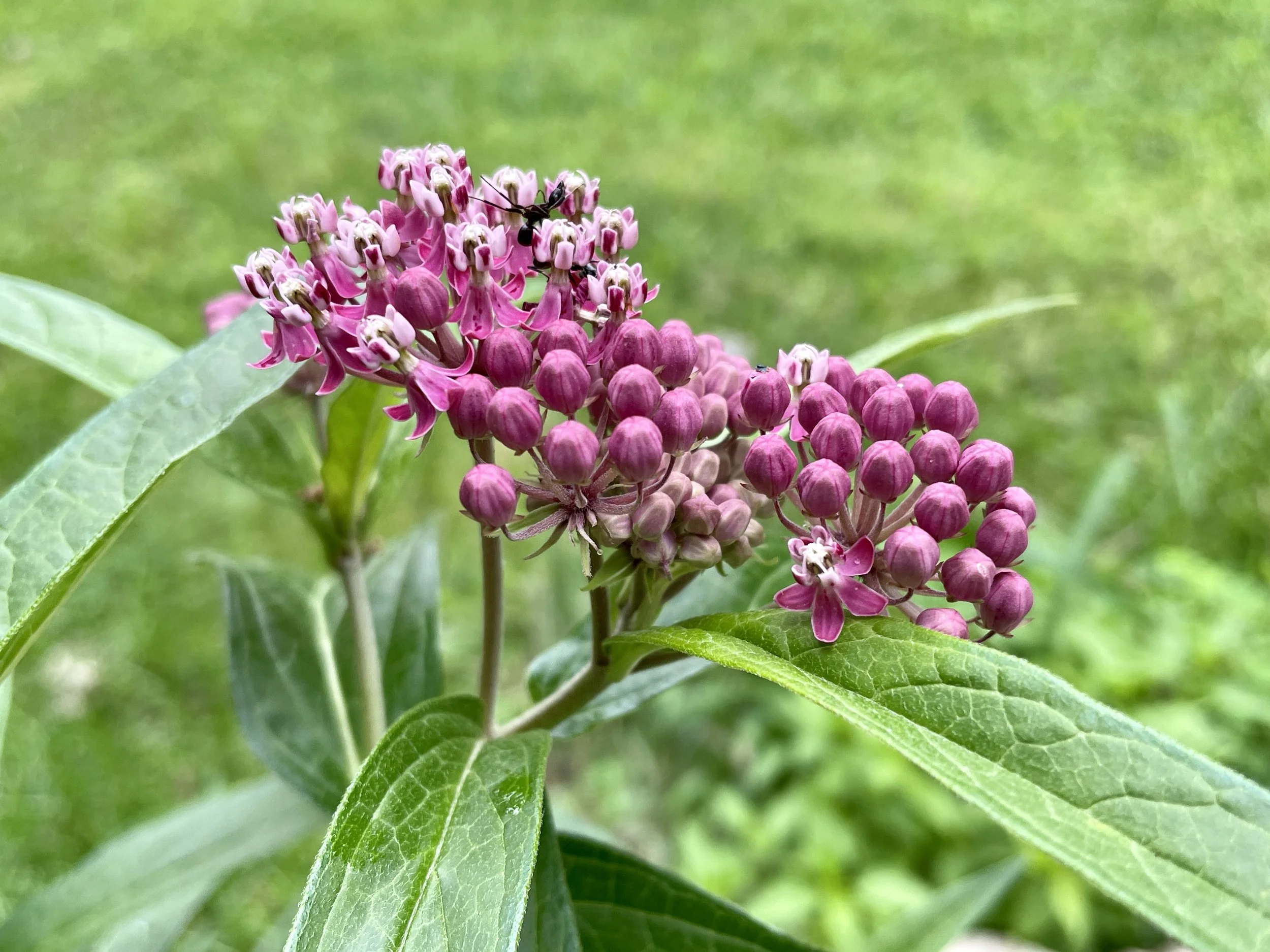
An appropriate milkweed for garden spaces as it does not spread like common milkweed. Birds will use the silky fluff from the seeds to line their nests. It is a larval host for monarch butterflies and deer do not prefer to eat it. Deep pink flowers bloom in late summer.
Milkweeds (Asclepias spp.) are the only food of the Monarch caterpillar. The flowers are very popular with many kinds of insects, especially long-tongued bees, wasps, flies, skippers, and butterflies, which seek nectar. Other insect visitors include short-tongued bees, various milkweed plant bugs, and moths, including Sphinx moths. In addition to the caterpillar of the Monarch Butterfly (Danaus plexippes), the caterpillars of a few moths feed on the foliage, including Enchaetes egle (Milkweed Tussock Moth), Cycnia inopinatus (Unexpected Cycnia), and Cycnia tenera (Delicate Cycnia). -Illinois Wildflowers
“...the Rarámuri, believe that when we leave this life our iwí, our spirit, transforms into a butterfly…It is understandable, then that species of milkweed are special to [the Rarámuri] as well as to many North American Indians, who see butterflies as symbols of the cycles of life.” - Enrique Salmón, Iwígara: The Kinship of People and Plants
Sun to part shade
Medium to wet soils
Height: up to 3’ tall
Blooms late summer
Herbaceous perennial
*Seed provenance: Wild Seed Project
An appropriate milkweed for garden spaces as it does not spread like common milkweed. Birds will use the silky fluff from the seeds to line their nests. It is a larval host for monarch butterflies and deer do not prefer to eat it. Deep pink flowers bloom in late summer.
Milkweeds (Asclepias spp.) are the only food of the Monarch caterpillar. The flowers are very popular with many kinds of insects, especially long-tongued bees, wasps, flies, skippers, and butterflies, which seek nectar. Other insect visitors include short-tongued bees, various milkweed plant bugs, and moths, including Sphinx moths. In addition to the caterpillar of the Monarch Butterfly (Danaus plexippes), the caterpillars of a few moths feed on the foliage, including Enchaetes egle (Milkweed Tussock Moth), Cycnia inopinatus (Unexpected Cycnia), and Cycnia tenera (Delicate Cycnia). -Illinois Wildflowers
“...the Rarámuri, believe that when we leave this life our iwí, our spirit, transforms into a butterfly…It is understandable, then that species of milkweed are special to [the Rarámuri] as well as to many North American Indians, who see butterflies as symbols of the cycles of life.” - Enrique Salmón, Iwígara: The Kinship of People and Plants
Sun to part shade
Medium to wet soils
Height: up to 3’ tall
Blooms late summer
Herbaceous perennial
*Seed provenance: Wild Seed Project